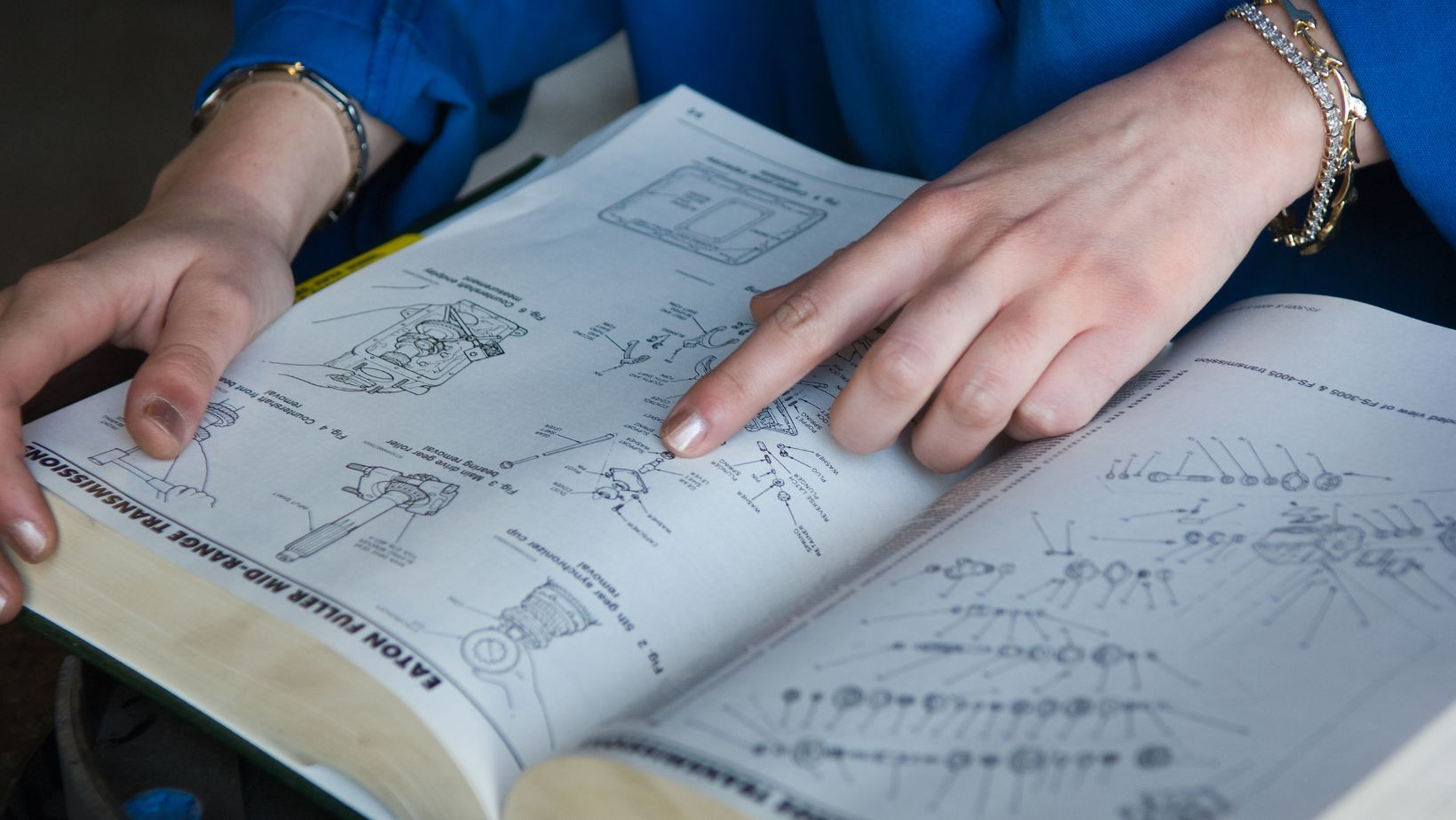
For companies exporting machinery or technical equipment, the translation of user manuals is a structural element of regulatory compliance and, consequently, an integral part of the product itself.
Within the European and international context, technical documentation is a legal requirement and must mandatorily accompany the machine for it to be placed on the market. A manual that is not correctly translated into the language of the destination country may result in a suspension of market placement, exclusion from international tenders or supply contracts and, in the most serious cases, direct manufacturer liability in the event of an accident. For this reason, user manual translation must be managed with the same level of control, traceability and rigor applied to design or production.
Machinery Directive and Documentation Obligations: What Manufacturers Need to Know
The Machinery Directive 2006/42/EC establishes that every machine must be accompanied by instructions in the official language of the Member State in which it is placed on the market or put into service. Annex I, section 1.7.4, clearly distinguishes between:
- Original instructions, drafted in the manufacturer’s language
- Translation of the original instructions, which must bear this wording and be accompanied by a copy of the original version
This distinction is not merely formal. In the event of litigation, proper document management may significantly affect the attribution of liability.
The Italian transposition of the Directive, through Legislative Decree 17/2010, makes these obligations binding on manufacturers, importers and distributors.
It is important to underline that the introduction of digital manuals, permitted by the most recent interpretative updates, does not remove the obligation to provide a translation in the language of the destination country. From an operational standpoint, this means that user manual translation must be planned already during the product industrialization phase. Treating it as a residual activity increases the risk of delays, non-compliance and corrective costs.
A further relevant regulatory development must also be considered: from 19 January 2027, the new Machinery Regulation (EU) 2023/1230 will fully apply, replacing Directive 2006/42/EC. As a European Regulation, it will be directly applicable in all Member States without the need for national transposition.
The new regulatory framework will introduce significant updates, including in relation to documentation digitalization and information requirements. Companies will therefore need to carefully review their documentation and technical translation processes with a view to future compliance.
User Manual Translation: Terminological Accuracy and Risk Control
The translation of technical documents requires specific expertise and a structured approach. A user manual is a functional document, often directly linked to end-user safety. It is not simply a matter of transferring content from one language to another, but of ensuring accuracy, consistency and regulatory compliance.
A terminological error in a start-up, adjustment or maintenance procedure may lead to improper use of the machine. The consequences are not only operational, but potentially legal, with implications for manufacturer liability.
One of the most critical aspects is sector specialization. Each industrial field uses its own specific technical vocabulary: mechanical engineering, electronics, medical devices, automotive or food processing all present different terminology, conventions and standards. Technical manual translation therefore requires the involvement of a specialized technical translator, whose linguistic competence is complemented by concrete knowledge of the relevant sector. Language proficiency alone is not sufficient to guarantee technical accuracy.
A second decisive element is consistency across versions and updates. Manuals evolve over time: software updates, design modifications and regulatory adjustments require periodic documentation revisions. Without professional tools such as CAT tools and translation memory systems, terminological consistency can progressively deteriorate from one version to the next. Consistency is not a stylistic detail, but a safeguard for quality, safety and document risk control.
Finally, localization of technical documentation goes beyond mere linguistic translation. It includes adaptation to:
- Local regulatory standards
- Units of measurement and technical conventions
- Safety symbols and warnings
- Specific legal requirements of the target market
A manual intended for a non-EU market may require substantial adjustments compared to the European version, even if the technical content remains the same. Neglecting these aspects exposes companies to non-compliance, disputes or delays in market entry.
Technology and Quality: MTPE, Human Oversight and Certified Standards
The evolution of Machine Translation has introduced new operational possibilities in professional technical translation. However, in the context of regulated documentation, technology cannot replace human responsibility.
The most widespread model today is MTPE (Machine Translation Post-Editing), which combines initial automated processing with thorough revision by a qualified professional. This approach improves efficiency, especially for extensive and repetitive technical documentation, while maintaining terminological, stylistic and regulatory control.
One point must be clearly stated: responsibility for documentation cannot be delegated to an algorithm. Even in workflows that include machine translation, the process concludes with the intervention of a human expert who verifies consistency, technical accuracy and compliance with both client requirements and applicable regulations.
From a standards perspective, translation process quality is governed by precise international references. ISO 17100:2015 defines requirements for professional translation services, including documented translator qualifications, mandatory independent revision, terminology management and process traceability.
Specifically regarding post-editing, the relevant standard is ISO 18587, which regulates the Machine Translation Post-Editing process and establishes clear criteria for post-editor competence and final quality control. Here too, a final stage involving qualified human intervention is required.
For a manufacturing company, working with a supplier compliant with ISO 17100 and ISO 18587 means being able to demonstrate that user manual translation, even when supported by MT technologies, has been managed according to certified, verifiable and structured criteria.
Criteria for Selecting a Qualified Partner
When choosing a supplier for technical manual translation, it is advisable to assess:
- Availability of sector-specialized technical translators
- A structured process with independent revision
- Use of CAT tools and translation memories
- Experience in translating CE documentation
- Ability to work with structured formats (InDesign, FrameMaker, XML/DITA)
A truly specialized partner integrates translation into the product documentation lifecycle, reducing legal risk and improving overall documentation consistency.
Translation as a Strategic Compliance Lever
In the global market, product quality is closely linked to the quality of its documentation. Professional technical translation is a safeguard for regulatory compliance, operational safety and reputational protection. It is not an administrative cost, but a structural investment that protects the manufacturer and facilitates access to international markets.
For an exporting company, user manual translation must be an integral part of its compliance strategy.
Aglatech14 ContenTalkers
Further reading:
- EUR-Lex – Machinery Directive 2006/42/EC (official EU text)
https://eur-lex.europa.eu - Normattiva – (Italian transposition)
https://www.normattiva.it - International Organization for Standardization (ISO) – ISO 17100:2015
https://www.iso.org