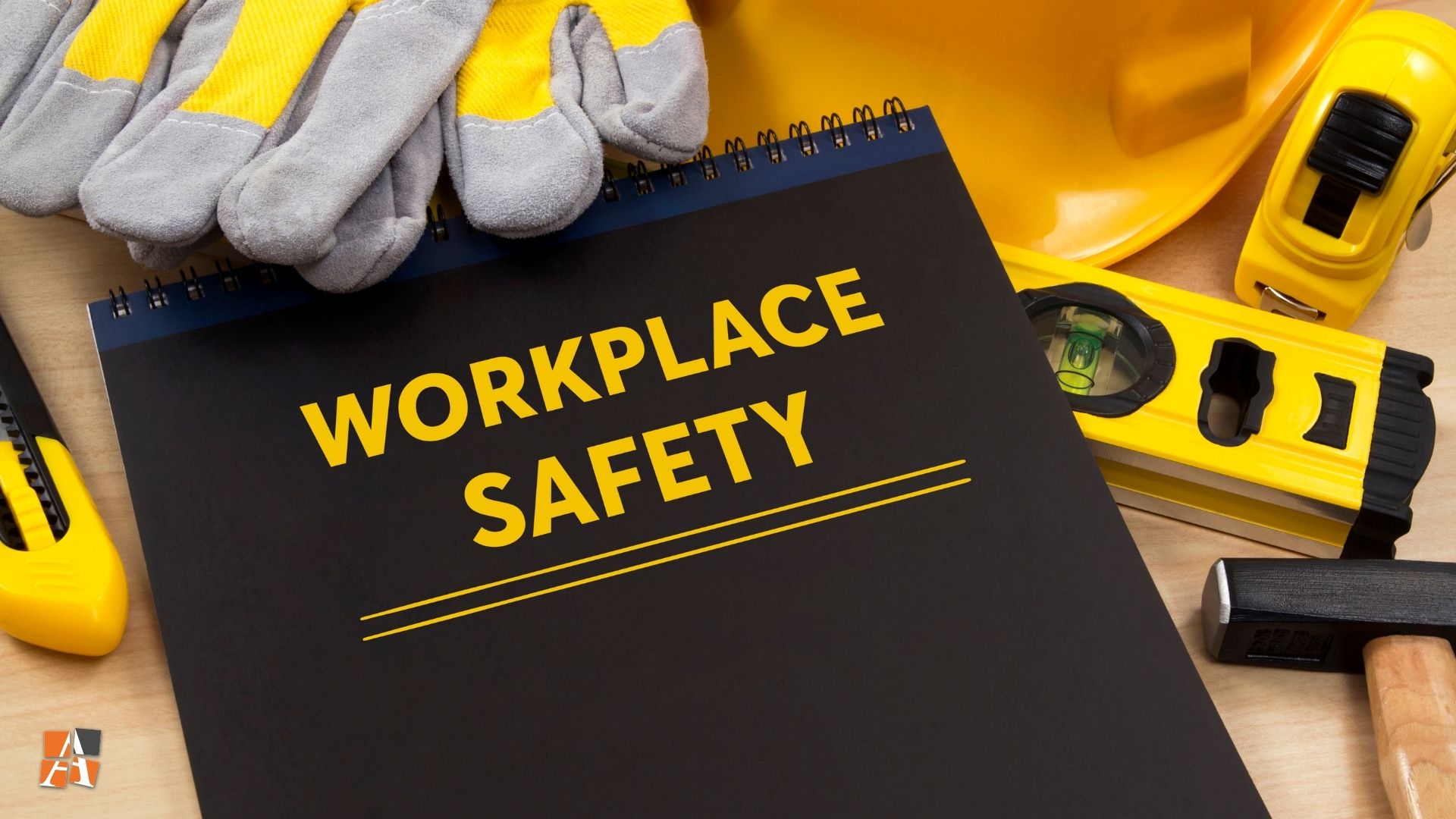
Poorly translated safety manuals can become a legal issue because anyone operating machinery relies on the instructions to work safely. If those instructions are ambiguous, incomplete or incorrect, they can lead to misuse, cause accidents and raise questions of liability.
Under the new Machinery Regulation, the translation of safety manuals can no longer be regarded as a simple operational step: it falls directly within the scope of compliance, legal risk and the manufacturer’s reputation.
Machinery Regulation 2027: greater market surveillance and effective penalties
From 20 January 2027, machinery placed on the European market will have to comply with the new Regulation (EU) 2023/1230. It replaces Machinery Directive 2006/42/EC and provides for no transitional period. In Italy, the previous Directive was implemented through Legislative Decree 17/2010, which lawmakers are now updating.
As this is a regulation, its provisions apply directly and uniformly in all European Union countries. Member States are responsible for defining certain aspects of its application, including the languages required for specific documents and the penalties applicable in the event of infringements.
The new Regulation also introduces rules concerning cybersecurity, artificial intelligence and robots working alongside people. As technological complexity increases, so does the number of warnings, safety information and specialist terms that need to be translated accurately.
Member States are responsible for establishing penalties, which must be effective and proportionate and may include criminal penalties for the most serious infringements. Market surveillance authorities may also order the withdrawal of machinery from the market and require corrective action. For an exporting company, the reputational damage caused by a withdrawal can be as significant as the penalty itself.
The country of destination determines the language of the instructions for use, safety information and EU declaration of conformity. An incorrect translation is therefore not merely a linguistic quality issue: it can also become a compliance issue.
Instructions may now also be provided in digital format, provided they can be printed and downloaded, but they must remain accessible online for the expected lifetime of the machinery and, in any case, for at least ten years. This makes the quality of the translation of technical and safety documentation even more important, as any errors may remain visible and verifiable for years.
Who is legally liable for a poorly translated manual?
First and foremost, the manufacturer is liable, as the Regulation assigns the manufacturer responsibility for the design, technical documentation and conformity assessment. By issuing the EU declaration of conformity, the manufacturer also assumes responsibility for the conformity of the machinery.
Instructions for use are also among the manufacturer’s obligations and must be clear, understandable and legible. As a result, an incorrectly translated or incomprehensible warning can make machinery non-compliant even when its technical design is flawless.
In Italy, anyone who manufactures or sells equipment that does not comply with safety legislation may face arrest or a fine (Legislative Decree 81/2008, Articles 23 and 57). In the event of an accident, issues of civil and criminal liability may also arise.
Outsourcing the translation does not automatically transfer liability towards anyone suffering damage to the translation provider: the manufacturer remains responsible for the conformity of the machinery. However, including clear clauses on quality, revision and the respective responsibilities of the parties in the contract with the translation provider can offer greater protection and make it possible to assess any right of recourse, depending on the contract and applicable law.
The manufacturer, however, is not the only link in the chain. Importers and distributors also have specific obligations. The importer must ensure that the machinery is accompanied by the instructions required under the Regulation, while the distributor must verify that they are available in a language that can be understood by users in the country of destination. In general, anyone selling machinery under their own name or trademark is considered a manufacturer for all purposes.
There is also a second area to consider: liability for defective products, governed by Directive (EU) 2024/2853. When assessing whether a product is defective, a court may also take the instructions for use into account. The quality and clarity of the information provided to users may therefore also be relevant from this perspective.
Quality and double-checking in translation: ISO 17100 and ISO 18587
To reduce the risks associated with the translation of safety manuals, it is important to adopt a workflow that does not rely on checks by a single linguist. In professional translation, double-checking takes the form of the bilingual revision required by ISO 17100.
A second qualified linguist, different from the translator, compares the target text with the source text. This step is particularly important when working with safety-related content: an omitted negation or an incorrect unit of measurement can completely reverse the meaning of a warning. Bilingual revision helps identify these errors before delivery.
The standard also requires translators and revisers to have documented qualifications and expertise in the relevant technical domain. It does not guarantee the complete absence of errors, but it introduces a structured and traceable process that makes it possible to demonstrate the due diligence applied.
When the workflow includes machine translation and post-editing, the relevant standard is ISO 18587, which defines requirements and competencies for the full post-editing of machine translation output.
Aglatech14 is certified to both standards: ISO 17100:2015 and ISO 18587:2017.
Post-editing or specialised human translation?
Not all technical documents have the same level of risk and, consequently, not all require the same translation process. Machine translation followed by human post-editing can work well for repetitive, low-risk technical content, such as technical data sheets and spare parts catalogues. In these cases, speed and terminological consistency are particularly important, but a qualified post-editor, appropriate glossaries and a final quality check are still necessary.
ISO 18587 establishes the requirements for full post-editing, which involves comprehensive human intervention and is therefore more suitable for translating technical content. Light post-editing, by contrast, essentially aims to make the text understandable through minimal intervention.
The situation changes when people’s safety or the legal validity of the product is at stake. Warnings, safety instructions, declarations of conformity and labels always require specialised human translation. An algorithm may confuse “must” with “may” or misinterpret a unit of measurement; in a declaration of conformity, even a single inaccurate term can compromise the validity of the entire document.
Terminology management: consistency starts before translation
In complex technical projects, checking the quality of an individual translation is not enough. It is equally important to determine how key terms should be translated and ensure that the same choices are applied consistently over time, across documents, languages and different linguists.
For this reason, Aglatech14 works with its clients on terminology management, starting with the terminology already in use. Previous manuals, corporate glossaries, technical documentation and instructions provided by the client help identify the terms that require particular attention.
Relevant terms are then organised into shared glossaries and, where necessary, submitted to the client for validation. Once approved, these choices become the reference for translators, revisers and post-editors and can be integrated into CAT tools and translation memories.
This approach is particularly important when dealing with safety-related terminology. A command, component or warning should not change its name from one manual to another. Structured terminology management therefore helps reduce ambiguity and inconsistency while building a company-specific linguistic asset over time.
What to do now
With the January 2027 deadline fast approaching, companies that manufacture or export machinery can already take action in four specific areas:
- Classify documents according to their level of risk, distinguishing warnings, safety instructions and declarations from primarily descriptive content.
- Choose a translation provider certified to ISO 17100 and ISO 18587, capable of applying different processes depending on the criticality of the content.
- Build and maintain glossaries, validated terminology and shared translation memories to ensure consistency across documents, versions and languages.
- Include contractual clauses covering revision, traceability and liability, and retain evidence of the process as part of the technical file.
Translating safety, reducing risk
A poorly translated manual is not simply a linguistic error that can be corrected later. It is a risk borne by the manufacturer and can result in penalties, market withdrawal and compensation claims. The new Machinery Regulation makes this risk even more tangible, while product liability legislation also gives relevance to the instructions provided to users.
For this reason, translating safety-related content means building a process in which technical expertise, revision, terminology and traceability work together. A certified process, managed by industry specialists and supported by structured terminology management, makes it possible to reduce linguistic risk before it becomes a compliance issue.
Aglatech14 ContenTalkers