The translation of Safety Data Sheets (SDS) represents a highly complex technical challenge that requires specialist expertise well beyond mere linguistic proficiency. In this article, we examine the relevant regulatory framework, the technical difficulties involved in translating regulated chemical documentation, the professional methodologies required to ensure compliance and safety, and the tangible benefits for companies operating in the chemical sector.
The role of SDS and the challenges of translation
Safety Data Sheets are mandatory documentation for every hazardous substance or mixture placed on the market. They consist of sixteen standardized sections in accordance with the GHS[1] (Globally Harmonized System), covering, among other information, substance identification, composition, hazards, first aid measures, firefighting measures, accidental release measures, handling and storage, exposure controls/personal protection, physical and chemical properties, stability and reactivity, toxicological and ecological information, disposal considerations, transport information, and regulatory information.
If your company exports, imports, or distributes chemical products or hazardous substances, you know that Safety Data Sheets are regulated technical documents that ensure the traceability of safety information throughout the entire supply chain. An inaccurately translated SDS primarily compromises the safety of those who handle these substances on a daily basis and also exposes the company to sanctions and trade restrictions.
When these documents cross national borders, translation becomes mandatory. The European Union, through the REACH Regulation[2] and the CLP Regulation[3], the United States with the OSHA Hazard Communication Standard, and Canada with WHMIS: each market requires SDS to be available in the country’s official language. Inadequate translations can expose companies to legal liability for workplace accidents, cause shipments to be blocked at customs, and lead to disputes with regulatory authorities.
Regulatory compliance requires in-depth knowledge of local specificities, including units of measurement, national legislative references, and maximum allowable concentrations of hazardous substances in workplace air (the so-called occupational exposure limit values). SDS are consulted daily by laboratory staff, production technicians, logistics personnel, and emergency response teams. Terminological ambiguity or poorly worded safety instructions can have real-world consequences for human safety and environmental protection.
The translation of SDS involves specific technical challenges. Chemical terminology is highly specialized and subject to international standardization. Hazard statements (H statements) and precautionary statements (P statements) cannot be translated freely: official, predefined versions exist for each language and are published by national regulators. Using a non-official wording, even if it appears equivalent, invalidates the document’s compliance.
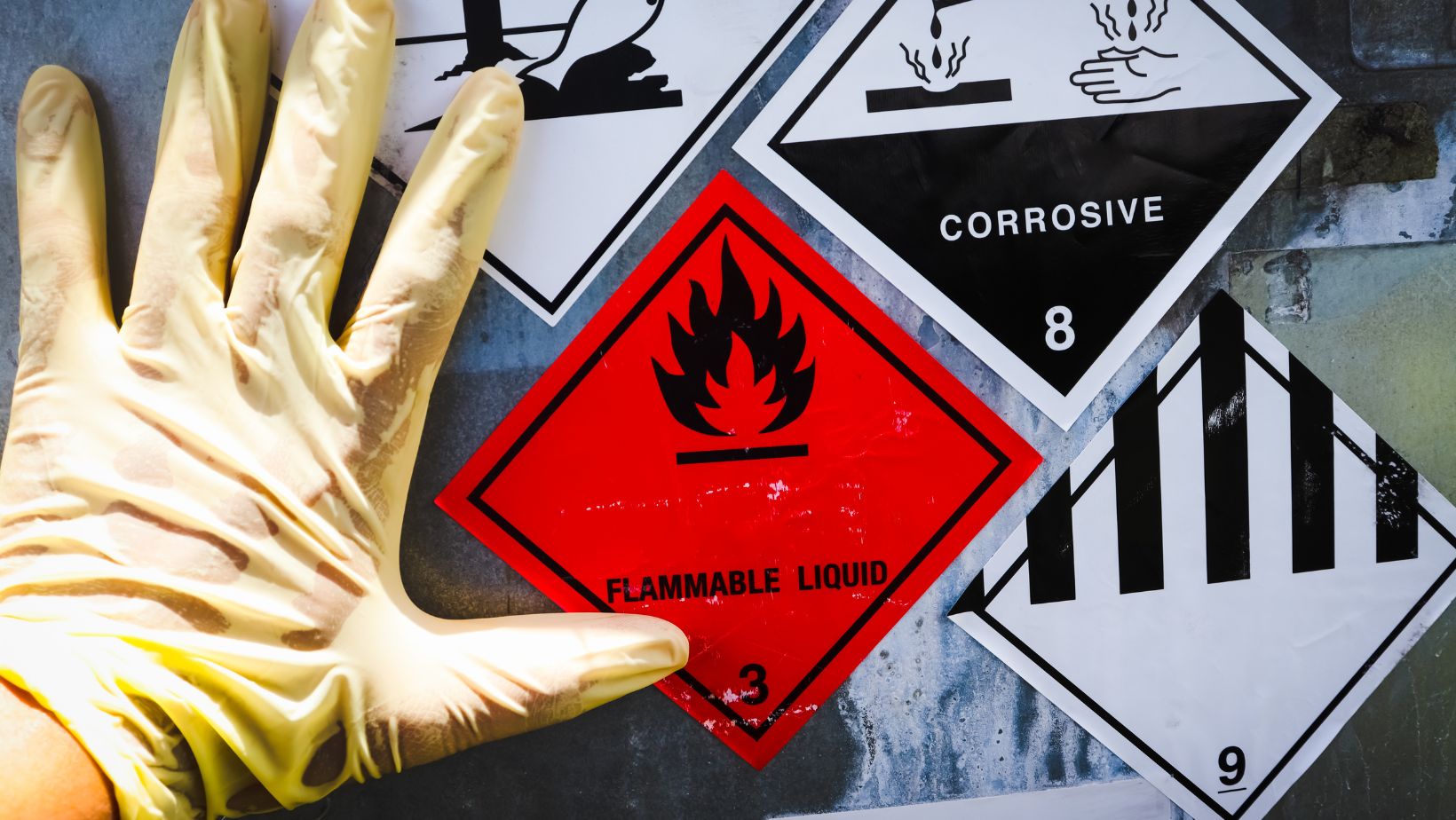
Regulations are subject to periodic revisions. The REACH Regulation has been amended several times, the CLP Regulation is updated to incorporate new GHS revisions, and the lists of classified substances are continuously expanded. The structure of SDS is strictly standardized into sixteen sections in a fixed order. Formatting also has regulatory significance: tables, hazard pictograms, and layout must comply with the prescribed standards.
The professional method for translating Safety Data Sheets
Professional SDS translation requires a rigorous methodology based on the integration of advanced linguistic skills, specialist technical knowledge, and terminology management systems. Each project must be entrusted exclusively to native-speaking translators with professional backgrounds in chemistry, materials engineering, industrial safety, or related disciplines.
Terminology management is a central element. For each client, customized glossaries and translation memories are created to record approved terminological choices, ensuring absolute consistency across all documents translated over time.
Adapting to local regulations goes beyond linguistic translation. Professional SDS translations include verification of legislative references relevant to the destination country, adaptation of units of measurement to local standards, and compliance of hazard pictograms with national specifications. An SDS intended for the U.S. market will follow OSHA references and use imperial units where appropriate, while a version for the European market will comply with REACH and CLP requirements using metric units.
A crucial aspect concerns the translation of hazard statements (H statements) and precautionary statements (P statements). These standardized phrases are not translated anew for each project but must be retrieved from official databases published by national regulators. In the European Union, for example, the ECHA (European Chemicals Agency) maintains a terminology database that includes H and P statements in all EU languages. The professional process involves identifying the statement code in the source document and replacing it with the official version in the target language.
Quality standards and certification
Quality assurance follows the UNI EN ISO 17100 standard for professional translation and UNI EN ISO 18587 for post-editing. Each project undergoes a bilingual review conducted by a second specialist, who verifies fidelity to the source text, terminological accuracy, consistency with approved glossaries, and compliance with applicable regulations.
Technical Desktop Publishing completes the process by reintegrating the translation into the original document layout. This step is particularly critical for SDS, where formatting is not merely an aesthetic matter but has regulatory relevance.
Errors to avoid traslating SDS
In SDS translation, two recurring critical issues can compromise regulatory compliance and operational safety.
Unsupervised machine translation: automated systems do not have access to official databases of translated H and P statements and generate paraphrases that do not match the required regulatory wording.
Multilingual inconsistency: when facilities within a multinational company use different language versions of the same SDS with misaligned terminology, internal communication issues and difficulties in emergency management arise.
The benefits of professional translation
Choosing a partner specialized in Safety Data Sheet translation delivers tangible and measurable benefits.
People’s safety and environmental protection: technically accurate SDS provide operators with clear and reliable information on handling procedures, required personal protective equipment, first aid measures, and emergency actions. This directly results in reduced risks of accidents, hazardous exposure, and environmental damage.
Regulatory compliance and market access: accurate technical documentation facilitates entry into new international markets, significantly reduces approval times by regulatory authorities, and minimizes the risk of administrative penalties.
Operational efficiency: terminological consistency across different language versions of SDS simplifies communication within multinational companies, facilitates staff training, and streamlines emergency management.
Corporate responsibility: providing accurate safety documentation is not only a legal obligation but a core element of a company’s safety culture. In an increasingly demanding regulatory environment focused on corporate responsibility, the quality of technical documentation becomes an indicator of organizational maturity in health, safety, and sustainability.
Aglatech14 ContenTalkers
[1] https://unece.org/about-ghs
[2] https://echa.europa.eu/regulations/reach/understanding-reach
[3] https://echa.europa.eu/regulations/clp/understanding-clp